Vitality & Optimisation
Poor sleep, fatigue, feeling out of balance and in need of a rest.
Request a consultation
Where a hard stretch shows in the face, and why it lingers
Most people say it simply: they look as worn out as they feel, colleagues ask whether they're all right, concealer no longer covers the shadows, or a holiday helped less than it once did. Short nights and months of strain leave their mark in a handful of places, from the skin's colour and moisture to the area beneath the eyes, and in time its thickness and firmness. Much of that fades once you are properly rested. What outlasts the busy period is what treatment is for.
i
Dullness
i
Dullness
A tired face loses its colour first. After short nights the skin looks paler and flatter, and as its outer layer renews itself more slowly, the surface scatters light instead of reflecting it evenly. In studies where volunteers were photographed after a night without sleep, people looking at the photographs rated them as paler and more tired. Where the flatness stays after a run of good nights, the surface and the hydration beneath it are where treatment works.
What might work: Facials, Skin Boosters.
ii
Dehydration
ii
Dehydration
Under prolonged stress, the skin's outer barrier takes longer to repair, so it keeps water less well: it feels tight by the afternoon, fine lines show more readily, and products that used to suit it can start to sting. It is short of water rather than oil, which is why it responds to hydration placed inside the skin, not only to richer creams on top of it.
What might work: Skin Boosters, Profhilo (Biostimulators).
iii
Shadows beneath the eyes
iii
Shadows beneath the eyes
Lost sleep shows around the eyes before anywhere else, as heavier lids and darker circles. When the circles are still there on rested mornings, something beneath them is usually the cause: skin thin enough for the vessels to show through it, or a hollow under the eye that holds a shadow. Thin skin improves with treatment for its quality, and a hollow with support placed beneath it.
What might work: the EyeLite Protocol or Polynucleotides for thin skin; Dermal Fillers for a hollow.
iv
Morning puffiness
iv
Morning puffiness
Puffiness after a short night, a late meal or a long flight is mostly fluid that gathers overnight around the eyes and over the cheekbones, and it eases as the day goes on. Steadier sleep and less salt in the evening do most for it. Where it is part of a tired look you'd like cared for, a needle-free programme for the skin of the mid-face can join the plan.
What might work: LPG Endermologie's malar programme.
v
Thinner skin
v
Thinner skin
Long periods of poor sleep have been linked in studies with skin that shows ageing sooner and recovers more slowly when its surface is stressed. Over months, that can leave the skin looking thinner and more finely creased, on the cheeks, the neck and under the eyes in particular. Because the change is in the skin's quality, it calls for treatment that helps the skin repair itself.
What might work: Polynucleotides, Skin Boosters.
vi
Softening firmness
vi
Softening firmness
Firmness is the slowest of these to change. Collagen is renewed more slowly with age, and a run-down year can make the softening that follows more noticeable, so the cheeks and jawline look less taut on tired days and the change stays. While it is mild, a treatment that hydrates deeply and prompts new collagen suits it well; where the skin has loosened further, the laxity treatments come into the plan.
What might work: Profhilo (Biostimulators); for looser skin, the treatments on the Tightening & Lifting page.
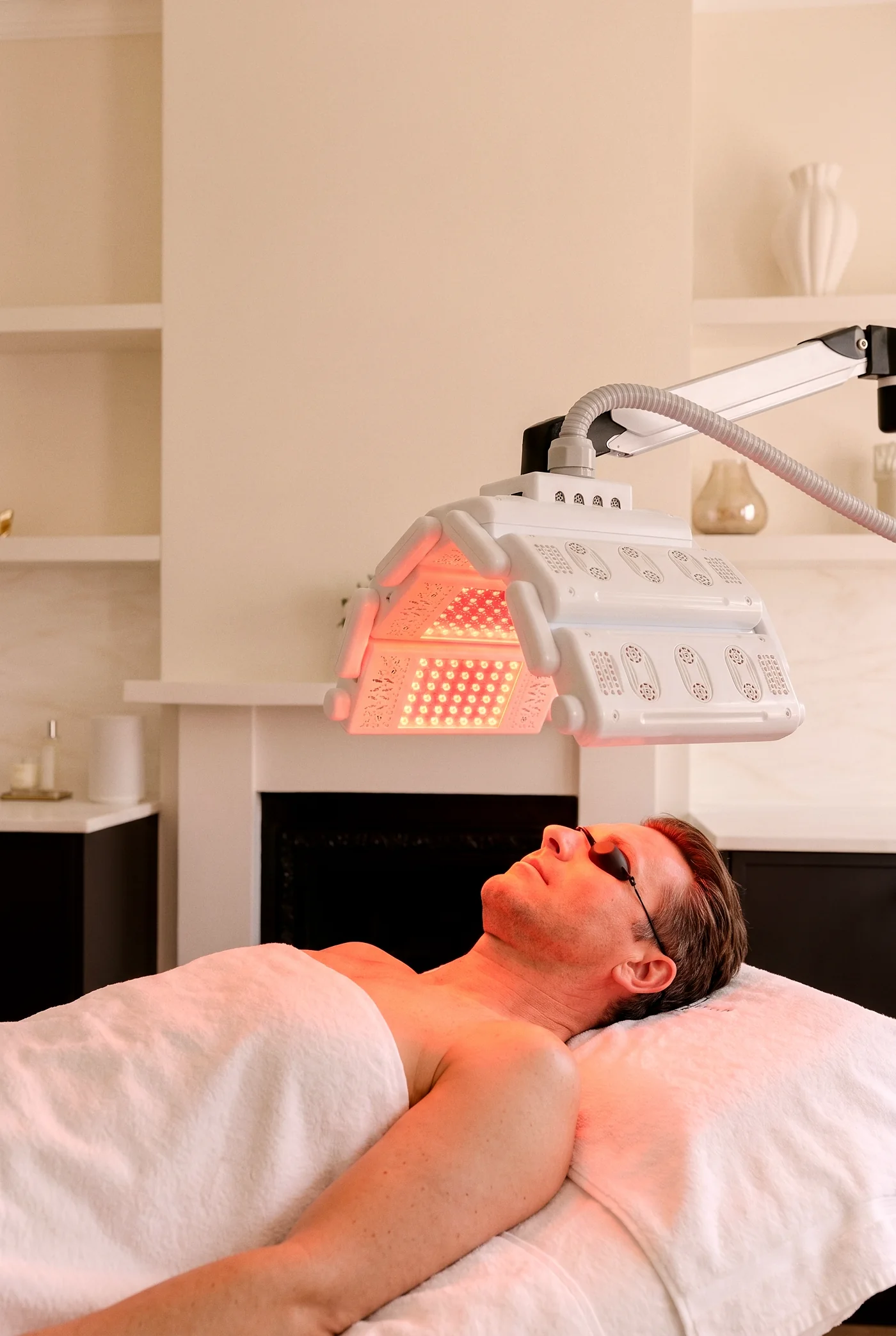
Treatments for skin that shows the strain
Skin Boosters
For dull, dehydrated skin
Skin boosters place hyaluronic acid in the skin itself, not under it, in tiny amounts spread evenly across the face, where it draws in water and holds it. That is the depth where skin that has run dry under strain needs it: the surface turns smoother and catches the light more evenly, while the shape of your face stays exactly as it is. ART Clinic uses four, and the one chosen for your skin decides whether you need a single treatment or a course of three. A very fine needle and numbing cream keep it comfortable, and any tiny raised bumps flatten, usually within two days.
Polynucleotides and the EyeLite Protocol
For thin skin, and shadows beneath the eyes
Polynucleotides are highly purified fragments of fish DNA, injected in small amounts to support the skin's own repair, the process a long run of poor sleep slows down. On the face, the neck or beneath the eyes they improve the quality of thin, finely creased skin across a course of three sessions. The EyeLite Protocol, which Dr Priya Verma devised for the under-eye area, pairs polynucleotides with a skin booster in one appointment, for skin there that is thin and dry at once. Work the same day is usual, and the little bumps where it was placed are gone in a day or two.
Profhilo
For skin that has begun to lose firmness
Profhilo is a hyaluronic acid gel placed at a handful of points on each cheek, from where it spreads through the skin, designed to hydrate it deeply and prompt it to renew its collagen over the weeks that follow. It suits skin that looks tired and has started to soften without loosening much, which is the change a demanding year tends to leave. The usual course is two sessions, four weeks between them, and the raised points where it went in flatten within a day or so. Profhilo is one of the four treatments on the Biostimulators page.
Facials
For a flat, tired-looking surface
Each of ART Clinic's four clinical facials includes LED light therapy and is given by our aesthetic practitioner. For a tired complexion the usual choices are the Obagi Blue Peel Radiance, whose salicylic acid peel lifts away the dull outer layer, and the Signature Belgravia Facial, ninety minutes of resurfacing, LED and LPG Endermologie with time to lie still. Skin looks clearer as you leave, and any light flaking after a peel passes within a few days. Facials suit anyone who wants a needle-free start, or regular care between injectable treatments.
A needle-free addition
LPG Endermologie
The malar programme is a thirty-minute session of gentle mechanical massage over the cheekbones and under the eyes, with nothing to recover from afterwards. People book it as regular care for a mid-face that looks tired, on its own or between other treatments in the plan. About LPG Endermologie
Questions about looking tired and run down
Can treatment make me look less tired?
Yes, where tiredness has settled into the skin or around the eyes. Dull or dry skin, thin skin beneath the eyes and firmness that has started to soften all respond to treatment, and the result reads as a face that looks rested. The energy behind it is a different matter: that comes back with sleep and time, and with your GP's help where it doesn't.
Should I see my GP first?
If you feel exhausted most days, have slept badly for weeks without an obvious reason, or have noticed other changes in your health, yes. Fatigue that lasts has many possible medical causes, and they deserve a proper look. Your practitioner asks about your health at your consultation too, and treatment for your skin can go ahead alongside your GP's care.
Is it worth starting while life is still busy?
Yes. Most of these treatments take half an hour and leave little to plan around, so they fit into a full diary. If a demanding period is about to end, some people like to see how much their skin recovers with rest first. Either way, the plan follows your timing.
What's a good first step?
Start with the skin. A skin booster or a facial is a gentle way in for dull, dehydrated skin, and the EyeLite Protocol for shadows beneath the eyes. Once you have seen how your skin responds, more can follow, at your pace.
Will anyone guess I've had treatment?
They tend to notice that you look rested, without being able to say why. After a skin booster, polynucleotides or Profhilo, tiny raised points fade over a day or two; a facial leaves nothing to see beyond, after a peel, some light flaking. If you have a date to look well for, tell us, and we'll plan back from it.
Does it hurt?
Very little. Numbing cream goes on before the injections and the needles are very fine, so most people feel only light pricks and a moment of pressure, and the appointment is short. Facials and LPG are comfortable throughout, and many people find them relaxing. Nervous? Tell us, and the appointment goes at your speed.
How many appointments will I need?
Polynucleotides are usually a course of three; a skin booster is one visit or three, depending on the booster; Profhilo is two sessions, four weeks between them. Facials are best repeated every four to six weeks, and LPG's malar programme is booked singly or in blocks of six or twelve. Every appointment is in your plan before you agree to it.
How long do results last?
It depends on the treatment, and on how your skin is looked after in between. A course of polynucleotides or skin boosters usually holds for six to twelve months, varying by product, and the change from Profhilo for several months. Facials are renewed every month or so. Sleep, sun protection and a steady routine help any result last, and we look at it with you at each review instead of setting top-ups by date.
I'm going through perimenopause or the menopause. Can you help?
With the changes you can see in your skin, yes. Skin often becomes drier, thinner and less firm in these years, and skin boosters, polynucleotides and Profhilo are all used for those changes. Questions about the menopause itself, and about how you feel, belong with your GP.
Won't better sleep fix it on its own?
Rest helps a great deal, and it is the first thing worth giving time to: colour, puffiness and much of the dryness return as sleep and routine settle. What tends to stay is the deeper change, such as thinner skin, a shadow from a hollow beneath the eye, or firmness that has softened. That is the part treatment improves.
Is this something men come in for?
Regularly. Long hours, travel and hard training show in men's faces in the same places, and the plan is built the same way: find which signs are yours, treat those, and keep the result understated.
For men
Who are these treatments for, and what do you check first?
They suit adults whose skin or eyes still look tired after a run of better nights. The consultation starts with your health: how you have been sleeping, medicines you take, any allergies (fish among them, for polynucleotides) and treatments you've had before. Pregnancy, breastfeeding or an infection in the skin there means injectables wait until afterwards.
Is it safe?
Yes, in experienced hands. What people notice afterwards is short-lived: tiny raised points or a little redness at each injection site, and occasionally a small bruise, all usually gone within a few days. Your practitioner talks you through the rarer effects before you decide, and you leave with aftercare advice for your skin.
What does it cost?
For skin boosters, fees begin at £300; polynucleotides and Profhilo each begin at £350 a session, while the EyeLite Protocol costs from £495. A facial is from £195, and a malar session of LPG £185. The fee follows the plan you agree at your consultation.
See the price listA tired face deserves a medical eye
Looking tired can come from the skin, from the structure around the eyes, from a demanding few months, or from a health problem that a GP should see. Telling these apart is a medical skill, and it is where every plan here begins: questions about how you have been sleeping and feeling come before anyone looks closely at your skin, so the treatment you are offered answers the part of tiredness that shows, and anything that needs your GP is raised with you first.
Dr Priya and the teamConcerns that often come with it
Tiredness seldom shows in one place only. If one change stands out more than the others, its own page goes into it in more depth.
Tightening & Lifting
Skin laxity, loss of elasticity, noticeable sagging across face, neck and body.
View →Begin with how you've been
A comprehensive diagnostic consultation: a thorough assessment leading to a truly bespoke treatment plan, created by you and your practitioner. Tell us how the last few months have gone and what you have started to see in the mirror. We'll explain which signs are yours, which treatments will improve them, and an order that suits your skin and your diary. You won't be sold to, and you won't be pushed.
Request a consultation How a first consultation runs