Anti-Wrinkle Injections
Anti-wrinkle injections use botulinum toxin, to temporarily reduce the movement of the facial muscles that cause lines when you frown, raise your eyebrows or smile.
Request a consultationAt a glance
Onset
3–5 days
The full effect develops at around the 14 day mark.
Longevity
3–4 months
Movement returns gradually, not all at once.
Downtime
None
Small marks at the injection points tend to settle quickly.
Discomfort
2–3/10
A brief sting at each point, with a very fine needle. Tell us if needles worry you.
Procedure time
15–30 min
A short appointment, once your assessment and plan are agreed.

How we approach
anti-wrinkle injections
Lines that form with movement, between the eyebrows, across the forehead and at the corners of the eyes, are often the first change people notice. When movement is the main cause, anti-wrinkle injections are a well-established medical treatment for those lines, which is why we offer them. When the cause is something else, such as skin quality, loss of fullness or skin laxity, we will tell you clearly and recommend the approach that will work instead.
i
How anti-wrinkle injections work
i
How anti-wrinkle injections work
Each time you frown, raise your eyebrows or smile, small muscles beneath the skin contract and the skin above them creases. Over the years, those repeated creases become lines: frown lines between the eyebrows, horizontal forehead lines and crow's feet.
Botulinum toxin is injected in very small amounts into the specific muscles causing those lines. It temporarily blocks the nerve signal that tells each muscle to contract, so the muscle moves less, the skin above it creases less, and the lines look softer.
ii
Assessment before any treatment
ii
Assessment before any treatment
Because anti-wrinkle injections use a prescription-only medicine, they are prescribed only after a face-to-face assessment. Your practitioner looks at your face when it is still and when it moves, asks about your health, medicines and previous treatments, and talks through what you would like to change and what you want to keep. Treatment follows only where your assessment shows a clinical reason for it, and when it does, your plan is truly bespoke: created by you and your practitioner, and designed to work for your face.
iii
Planned around your face
iii
Planned around your face
Faces move differently, so plans do too. Brow position, eyelid shape and muscle strength all affect where the injections go and how much is used. Men's frown muscles are often stronger and the male brow usually sits lower and flatter, so the plan accounts for both, softening the 11s while keeping the brow's natural shape. If you would like to start with one area, tell your practitioner: it is a sensible way to begin.
iv
"I don't want to look frozen, or done."
iv
"I don't want to look frozen, or done."
It's a fair worry, and the right one to raise. A frozen look usually comes from treating more muscles than a face needs, or treating them more heavily than the lines call for, without regard for how that face moves.
We plan the other way round. Your practitioner identifies the muscles creating the lines you've noticed, assesses how strongly they move, and plans the dose and placement so those lines soften while your expressions still read as yours.
Natural-looking does not mean under-treated. A dose too small to soften your lines is not a lighter option that still works; it is simply one that won't. The aim is a visible, temporary improvement in those lines, in a face that is still recognisably yours.

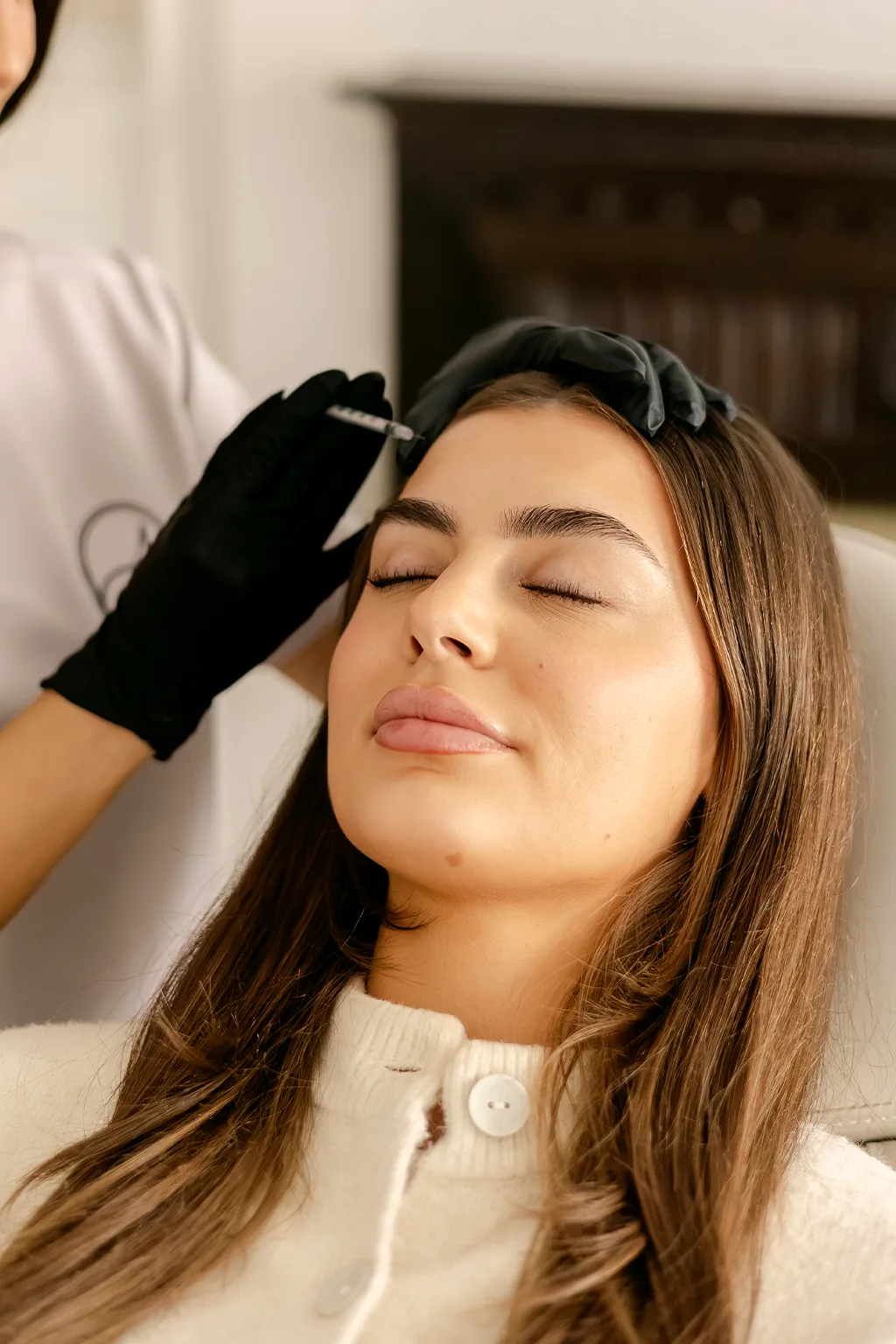
What happens,
in order
Step 1 of 6 · Before anything
Your consultation and assessment
A thorough assessment of your face, still and in movement, alongside your medical history, medicines and previous treatments. Your practitioner will advise whether treatment is clinically indicated and, if it is, you agree the plan together.
What this treatment is not,
and when another option is better
Anti-wrinkle injections work on one cause of lines: movement. These are the treatments they are most often confused with, and what each one does instead.
Dermal fillers
Dermal fillers add volume beneath the skin. Anti-wrinkle injections add none: they reduce the movement that creases it. Where loss of fullness or lost contour is part of what you've noticed, fillers may be the better answer, and the two are sometimes planned together. Your practitioner will tell you which applies to your face.
Skin Boosters
Skin boosters are injected to hydrate the skin and improve its quality. They do not reduce muscle movement, and anti-wrinkle injections do not improve skin quality, so neither is a substitute for the other. Where lines are partly a skin-quality change, both may have a place in your plan.
Polynucleotides
Given as a course, polynucleotides help the skin repair itself and improve its quality. Where fine creasing stays when your face is still, that is a skin change rather than a movement one, and this is the treatment that addresses it.
LaseMD
LaseMD is a laser treatment for rough texture, dullness and pigmentation. It does not affect the muscles that create movement lines, so the two are not interchangeable: each works on a different part of what you may have noticed.
If you're not sure which of these applies to you, that is what the consultation is for: we assess first, then recommend what will work.
In medically
qualified hands
Anti-wrinkle injections at ART Clinic are prescribed and given by one of our medically qualified practitioners: a doctor, or a nurse prescriber. Their training covers facial anatomy, the dosing and placement of botulinum toxin, and recognising and managing side effects.
Whoever treats you, the standard is the same: the same assessment, the same consent, the same aftercare. Dr Priya Verma founded ART Clinic on that principle, and it covers every injection given here.
Pricing
Anti-wrinkle injections used to temporarily relax muscles in the face and neck, to soften lines and wrinkles caused by expression. A consultation comes first.
Dr Priya
Aesthetic Practitioner
1 area
£300
£250
2 areas
£400
£350
3 areas
£475
£400
4 areas
£550
£450
Full face
£595
£495
Neck
£350
£300
Full face & neck
£795
£695
Smaller individual areas
e.g. bunny lines, gummy smile, lip flip, smokers lines
£250
£200
Your final cost is confirmed at your consultation, once you and your practitioner have agreed your plan. It depends on the number of areas treated, the dose your plan needs, and which practitioner treats you. Pricing reflects the treatment your assessment shows will work.
Full price listQuestions about
anti-wrinkle injections
The things people most often want to ask, answered the way a clinician would answer them across a desk.
Will I look frozen?
The aim of every plan we make is that you won't. A frozen look usually comes from treating too many muscles, or treating them too heavily. Your practitioner plans the dose and placement around the muscles causing your lines, so those lines soften while your expressions still read as yours. That doesn't mean under-treating: a dose too small to make a difference is not the approach that will work.
Will anyone notice?
The aim is a subtle change: lines that crease less, in a face that still looks like yours. Small marks at the injection points tend to settle quickly, and bruising is possible, so allow time before an important occasion. Your treatment is confidential, and what you share about it is entirely your choice.
Does it hurt?
Most people describe a brief sting or pinch at each injection point, around a two or three out of ten. The needle is very fine and the discomfort is short-lived. If you're anxious about needles, tell your practitioner, and we'll take it at your pace.
What if I hate it?
The effect is temporary and wears off gradually over the following months. It can't be reversed straight away, which is why a first treatment is planned carefully and reviewed with you once the result has developed. If something isn't right, tell us: your practitioner will assess it, explain what will help, and use what you've learned together to plan any future treatment.
Can I go back to work straight away?
Usually, yes. Most people return to work or their day immediately afterwards. There may be small marks at the injection points for a short time, and your practitioner will explain which activities, such as strenuous exercise, to avoid for a while afterwards.
Is there anyone it isn't suitable for?
In some situations anti-wrinkle injections are not suitable, or need particular care. We do not treat anyone under 18, and treatment is not recommended during pregnancy or breastfeeding. It is also not suitable if you have a neuromuscular condition such as myasthenia gravis, or a history of difficulty swallowing or breathing, an infection or inflammation where the injections would be given, or an allergy to any ingredient. Tell us about every medicine you take, including some antibiotics and blood-thinning medicines, and never stop a prescribed medicine without medical advice.
Extra care is needed if your brows sit low or your upper eyelids feel heavy, because treating the forehead can make that feel worse: sometimes treating less of the forehead is what works, and sometimes the right advice is to leave it untreated. If your lines are mainly there when your face is still, a skin-quality treatment may suit you better. And if you are hoping for a change this treatment can't deliver, we will talk that through with you honestly before anything is considered.
Being told a treatment isn't right for you is part of good care, and it always comes with a clear explanation of what will work instead, or why the best choice for now is to wait.
How do I know if I need this?
You don't need it: it's a choice, and not one you have to make today. If lines between your eyebrows, across your forehead or around your eyes bother you, a consultation will establish whether movement is the main cause, which anti-wrinkle injections can help with, or whether it is skin quality, volume or laxity, which other treatments address. It's fine to come for an assessment and decide to do nothing for now.
Is this the same as the brand name most people know?
Anti-wrinkle injections use botulinum toxin type A, a prescription-only medicine made by several manufacturers under different brand names, and the name most people know is one of those brands. Your practitioner will tell you which product is used for your treatment, and why it was chosen for your face.
How long does it last?
Around three to four months, though it varies from person to person, and movement returns gradually rather than all at once.
Will I have to keep having it?
No. Each treatment is a separate decision. If you stop, the effect wears off gradually and your muscles move as they did before. If you continue, your treatment plan is reviewed over time, and each treatment is planned on how well the last one worked for you.
Are anti-wrinkle injections suitable for men?
Yes. For many men the aim is functional: softening the 11s and looking less stern or tired, without it being obvious. Men's frown muscles are often stronger and the male brow usually sits lower and flatter, so dose and placement are planned around both, keeping the brow's natural shape. For men
Will it change the shape of my eyebrows?
Your brow position is assessed before anything is planned, and dose and placement are chosen to keep your brows' natural shape. A temporary heavy feeling or drooping of the brow is a possible side effect; if it happens, contact the clinic and your practitioner will explain what will help.
I've had anti-wrinkle injections elsewhere. Can I continue at ART Clinic?
Yes. You'll start with a consultation, so your practitioner can assess how your face moves now and review your previous treatment. If you know which product was used and when, bring those details: they help us plan a treatment that works for you from the start.
Is it safe?
Anti-wrinkle injections use a licensed prescription medicine, prescribed after a face-to-face assessment and given by a medically qualified practitioner. Most side effects are mild and temporary: headache, redness, swelling, tenderness or bruising where the injections were given, swelling of the eyelids, a temporary heavy feeling or drooping of a brow or eyelid, or an uneven result between the two sides. Rarely, an allergic reaction can occur, and very rarely the effect can spread beyond the treated area and cause muscle weakness, or difficulty swallowing, speaking or breathing. If that happens, call 999 or go to A&E, then let the clinic know. Your practitioner will explain all of this before you consent.
A consultation:
the first step
A comprehensive diagnostic consultation: your face assessed still and in movement, so any plan is built around the muscles actually creating the lines you've noticed.
Your first treatment or your next: you choose which lines to soften and when, guided by your practitioner. You won't be sold to, and you won't be pushed.
We look forward to welcoming you to the world-class flagship clinic of Dr Priya Verma.
Request a consultation Call 020 3355 2030