

Polynucleotides
Polynucleotides are a course of injections made from highly purified fish DNA, designed to help thin, crepey or less elastic skin repair itself, without adding volume or changing the shape of your face.
Request a consultationAt a glance
Onset
4–8 weeks
The skin responds gradually, session by session, and the change keeps building for some weeks after the third.
Longevity
6–12 months
A typical span before a single top-up session; your skin keeps ageing, so any top-up is planned with you at your review.
Downtime
1–2 days
Back at work the same day, for most; the small raised bumps at each point flatten within a day or two.
Discomfort
2–3/10
Numbing cream first and a very fine needle, so most people feel only light, quick pricks, a touch more beneath the eyes.
Procedure time
30 min
Each session, whichever area, and the EyeLite Protocol too; a course is three sessions, a few weeks apart.

Polynucleotides treat the skin, not the shape of your face
Most people who ask us about polynucleotides describe a change in the skin itself: finer creasing under the eyes, a crepey neck or décolletage, less spring across the cheeks, while the shape of the face has barely moved. That is the change we offer polynucleotides for. They work within the skin and add nothing to its volume, so your features stay as they are, and where a hollow or pigment shows as well, the treatment for it can join your plan.
i
What is injected, and what it is designed to do
i
What is injected, and what it is designed to do
Polynucleotides are long chains of nucleotides, the units DNA is built from, extracted from fish (usually salmon or trout) and purified until only those chains remain. They are injected in tiny amounts into the skin.
Once there, they are designed to support fibroblasts, the cells that make collagen and elastin, to help the skin hold on to water, and to calm inflammation. That work takes weeks rather than days, which is why polynucleotides are given as a course and your result is looked at once it has finished.
ii
Where your skin has thinned, mapped first
ii
Where your skin has thinned, mapped first
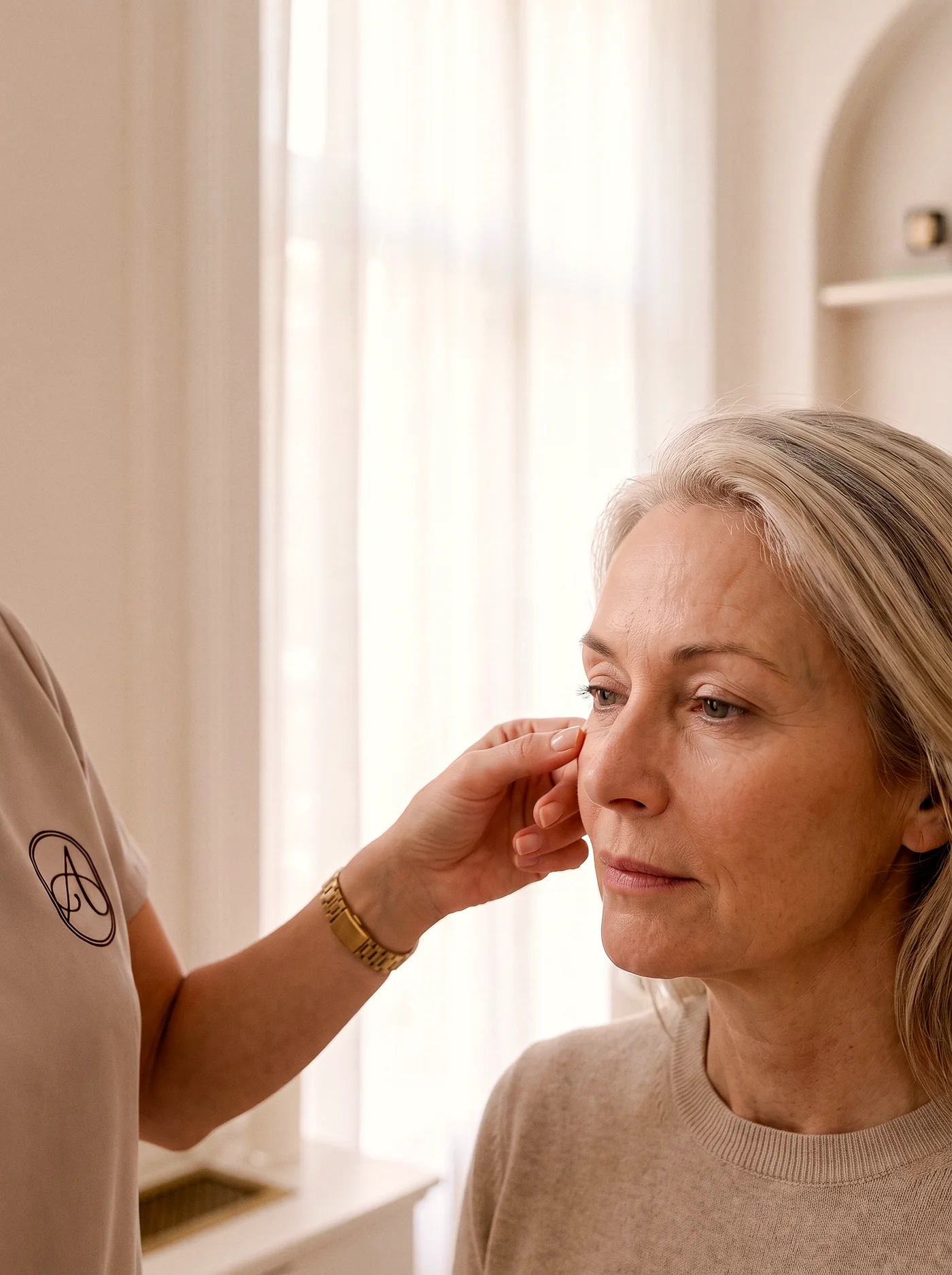
Your practitioner examines each area you'd like to improve in good light, watches how the skin creases and how quickly it recovers when gently lifted, and notes where it has thinned, where volume has shifted and where there is pigment, since each is treated its own way. You'll be asked about your health, allergies (fish included), medicines, and anything injected into the area before. Polynucleotides are then planned for the areas where thinning shows, at the depth and spacing that skin needs.
iii
Every area we treat, and the EyeLite Protocol
iii
Every area we treat, and the EyeLite Protocol
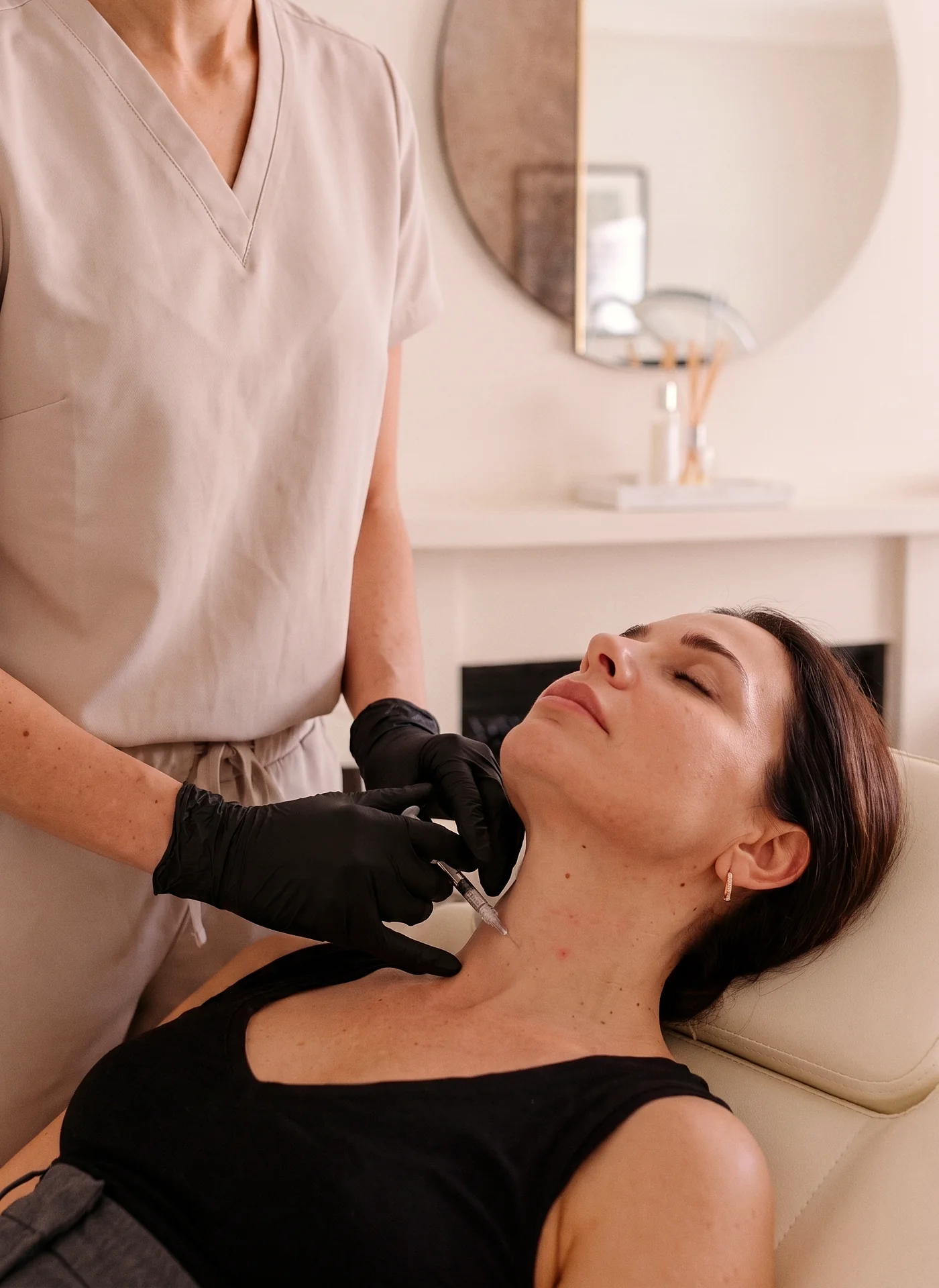
On the face, polynucleotides can be given beneath the eyes, across the upper or lower face and around the mouth; below it, on the neck and décolletage; and on the body, the abdomen, inner arms and thighs. Beneath the eyes there is also the EyeLite Protocol, Dr Priya Verma's own under-eye treatment, in which polynucleotides are given with NCTF, a skin booster, in the same appointment. You can start with the one area that bothers you most, see how your skin responds, and add more when you choose.
iv
"I don't want to look filled again."
iv
"I don't want to look filled again."
Many people ask about polynucleotides after years of filler that no longer feels right for them. That look doesn't come from polynucleotides: they are designed to improve skin quality and leave volume alone. The small raised bumps straight after a session are the injected liquid, and they flatten as it disperses.
In practice, that means the same face with better skin: under-eye skin that creases less finely, a neck that looks less crepey, a surface that feels smoother. The change arrives gradually, so what people pick up on is that you look well rested, not that you've had something done.
What we use them for
Thinning skin sits within three of the concerns people bring to ART Clinic, and in each one polynucleotides have a clear part to play: improving the skin itself.
Eyes & Tiredness
Beneath the eyes, skin is thinner than anywhere else on the face, so any further thinning soon shows as fine creasing and a tired, shadowed look. Polynucleotides go in as tiny amounts just under that skin, designed to improve its quality as a course goes on. Where it needs hydration too, the EyeLite Protocol adds NCTF in the same appointment.
Volume & Refresh
Where a face has lost some fullness, the skin over the cheeks has often thinned and lost its spring at the same time. Polynucleotides are used to improve that skin's elasticity and hydration; the fullness itself is restored by dermal fillers or a biostimulator, in the same plan. Together they answer both layers of the change.
Tightening & Lifting
Loosening skin has often thinned and turned crepey too, most of all on the neck and around the jaw. Polynucleotides work on the texture and elasticity of that skin, while the tightening itself comes from XERF or Endolift®, planned alongside. That way, the skin being firmed is in better condition as well.
What happens,
in order
Step 1 of 6 · Before any session
Your areas and sessions, agreed
Your practitioner looks at where your skin has thinned, and together you agree which areas to treat, whether the EyeLite Protocol suits your under-eyes, and how many sessions each area needs. You'll know the fee before anything is booked.
What people weigh
polynucleotides against
Four treatments come up most often when people are deciding on polynucleotides. Each works on the skin or the face in its own way, and more than one of them can sit in a plan alongside polynucleotides.
Skin boosters
Skin boosters such as SkinVive and Restylane Vital lay hyaluronic acid through the skin to draw in water, which suits skin that looks dry, dull or finely lined. Polynucleotides are chosen where the skin itself has thinned. Under the eyes, the EyeLite Protocol gives both in one appointment, and on the face or neck a plan can include each.
Dermal fillers
Where a hollow or lost fullness is what you've noticed, dermal fillers restore it, and the difference shows the same day. Polynucleotides add no volume: they improve the skin that lies over it. Where a hollow and thin skin sit together, your practitioner plans both, and in which order.
Profhilo
Profhilo is the other injectable people most often set beside polynucleotides. It is a high concentration of hyaluronic acid, given at a handful of set points and allowed to spread through the tissue, and it suits skin that has lost firmness as well as moisture. Polynucleotides go in as many tiny amounts, which suits crepey skin beneath the eyes, around the mouth and on the body.
Microneedling
Microneedling works from the surface: the SkinPen's fine needles make controlled micro-channels that prompt the skin to renew itself, which suits rough texture, enlarged pores and acne scarring. Polynucleotides are injected into the skin and suit thinning and crepiness. Where you have both, the two can be spaced within one plan.
Often two or three of these changes show at once. Your practitioner separates them at your assessment, so each part of your plan has a reason behind it.
Why it matters who gives your polynucleotides
Most of what makes a course work happens before the first injection. Thinning, lost volume and loosening can look alike in the mirror, so your practitioner first maps where the skin itself has thinned, then chooses the areas, depth and spacing where polynucleotides will do the most.
Technique matters most around the eyes, where the skin is at its thinnest and small blood vessels run just beneath it, so each injection's depth and spacing are set for that skin. Every session follows sterile technique, as every injection at ART Clinic does. And every course ends with a review: the change so far, and any next step you want.
Polynucleotides Pricing
A single session is priced by area: one fee covers every face and neck area, another every body area. Three-session courses are priced separately for face and body, and the EyeLite Protocol has a fee of its own.
Polynucleotides
Dr Priya
Aesthetic Practitioner
One session, per area
Face and neck: under the eyes, upper or lower face, around the mouth, neck, décolletage
£400
£350
Body: abdomen, inner arms, thighs
£700
£600
Three-session course
Face course
£1,150
£1,000
Body course
£1,800
£1,500
EyeLite ProtocolNCTF with polynucleotides, beneath the eyes
£595
£495
Which rows apply to you is agreed at your consultation, once your plan names the areas and how many sessions each will have. A course is priced as one because it is planned as one: three sessions, then a review together at the end.
Full price listQuestions about
polynucleotides
Straight answers to what people ask us most, from what polynucleotides are made of to how soon you can go back to work.
What are polynucleotides made from?
From fish DNA, most often salmon or trout, broken down into chains of nucleotides and highly purified before use. If you have a fish allergy, mention it at your consultation, and your practitioner checks it against the product's instructions.
Is 'regenerative' just marketing?
It can be: the word gets attached to plenty of treatments with little behind them. We use it in one exact sense, for a treatment designed to help the skin's own cells repair it, gradually, over a course, rather than filling, lifting or covering what has changed. Polynucleotides fit that meaning, and published studies of them have measured better elasticity, hydration and texture in treated skin.
Regenerative aesthetics, without the hype
Are polynucleotides the same as filler, or as skin boosters?
No, and the difference matters: filler is a gel that restores volume where it has been lost; skin boosters such as SkinVive use hyaluronic acid to hold water in the skin; polynucleotides are designed to support the skin's own repair cells, adding neither volume nor water. They are sometimes marketed as skin boosters too, which is where the confusion starts.
What is the EyeLite Protocol?
Dr Priya's own treatment for the skin beneath the eyes. Polynucleotides go in to support thin, crepey skin, and NCTF, a skin booster made for delicate areas, to add hydration, both in one half-hour appointment. It is booked and priced on its own, and your practitioner can tell you at your consultation whether it or polynucleotides alone suits your under-eyes better.
Can polynucleotides help dark circles?
Where the skin under the eye has thinned and looks darker because of it, polynucleotides are used to improve that skin. Most dark circles have more than one cause, though, and where pigment or a hollow plays a part, your plan adds the treatment for each. Eyes & Tiredness explains how to tell the causes apart.
Dark circles and their causes
Does it hurt?
Most people find it comfortable. Numbing cream is applied beforehand, the needle is very fine, and what you feel is a run of light, quick pricks, a little more noticeable beneath the eyes. If needles make you anxious, tell us at the start: your practitioner can pause whenever you like, and the session goes at your pace.
Will I have bumps, and how soon can I work?
Nearly everyone is back at work the same day. Small raised bumps where the injections went in usually flatten within a day or two, and under the eyes a small bruise is occasionally possible, so book a few days ahead of a big occasion.
How many sessions are there, and when does the change show?
Usually three, a few weeks apart, planned and priced as a course. The difference comes gradually, building over the weeks after your final session, and your review is timed to see it.
How long does it last?
Typically six to 12 months, after which a single session can refresh it. Your skin goes on ageing after any course, so top-ups are planned at your review, on what your skin shows, rather than on a timetable fixed in advance.
Can polynucleotides be used on the body?
Yes. As well as the face, neck and décolletage, we treat thin, crepey skin on the abdomen, inner arms and thighs, with body areas priced separately, as shown above. For loose skin on the body, Endolift® Body is the treatment to ask about.
Are polynucleotides suitable for men?
Yes. Men usually ask about them for thin skin under the eyes, or crepey, sun-exposed skin on the neck. Because nothing is added to the face, its shape stays as it is, and the aim is to look less tired, not treated.
Men at ART Clinic
I've had filler. Can I still have polynucleotides?
Usually, yes, and many people come to them from filler. Tell us what was used, where and when: old filler can outlast the change you could see, so your practitioner checks what remains and plans your course around it.
Are polynucleotides suitable for me?
They suit most adults whose skin has thinned or lost elasticity, on the face, neck or body. If you're pregnant or breastfeeding, or have an infection where the injections would go, your course simply starts later. Your practitioner goes through your medical history first, including any fish allergy, blood-thinning medicine or autoimmune condition.
What are the risks?
Usually, all you'll notice is some redness, swelling or tenderness, and the raised bumps that flatten within a day or two. Anything beyond that is uncommon, and your practitioner goes through each one with you before you consent. If anything concerns you afterwards, call us; the MHRA's Yellow Card scheme also takes reports.
Your polynucleotide course, planned around your skin
A comprehensive diagnostic consultation: a thorough assessment leading to a truly bespoke treatment plan, created by you and your practitioner.
Tell us where your skin has changed and what you've had before, and you'll leave with a course set out for you: the areas, the number of sessions, whether the EyeLite Protocol is part of it, and the fee. You won't be sold to, and you won't be pushed.
Request a consultation Call 020 3355 2030 What the consultation covers