

LaseMD Ultra
LaseMD Ultra is a 1927 nm fractional laser for pigmentation, sun spots, uneven skin tone, dullness and rough texture, working in the top layers of the skin while leaving its surface intact, with little downtime.
Request a consultationAt a glance
Onset
1–2 weeks
Once your skin has flaked after the first session, a brighter, more even surface can show, and the change builds with each session that follows.
Longevity
6–12 months
Daily sun protection carries a result towards the top of this range, and a top-up session can extend it.
Downtime
1–3 days
Pink, as after a day outdoors, and a little rough to the touch for a couple of days, then fine specks flake away; most people carry on with their week.
Discomfort
2–3/10
Numbing cream goes on first, so most people notice only warmth and a light prickle as the laser passes.
Procedure time
60 min
Each session, as Pabau books it, with numbing and the serum inside the hour; a course is usually four sessions.

Pigmentation, dullness and rough texture, treated together
We use LaseMD Ultra because sun spots, uneven skin tone, dullness and rough texture so often arrive together, and one course can treat all four with little downtime. Where pigmentation is part of the picture, your plan is shaped by its type: pigment left by the sun usually responds well, while melasma, and the darker marks that spots or inflammation leave behind, are treated with a gentler, slower plan.
i
What the 1927 nm laser does in the skin
i
What the 1927 nm laser does in the skin
LaseMD Ultra uses a thulium laser at a wavelength of 1927 nm, which is strongly absorbed by the water in the skin's upper layers. It is fractional: instead of heating the whole surface, it treats thousands of microscopic zones with untouched skin between them, and that surrounding skin is what lets the treated areas recover quickly. It is also non-ablative, so the surface is left in place.
In the days after a session, the treated skin renews, and some of the excess pigment is carried up and shed with it, often as fine darker specks that flake away. The same renewal can leave the surface smoother and the tone more even. The treated zones also act as tiny channels, and a serum is applied straight afterwards so it can pass through them into the skin.
ii
What we look at first
ii
What we look at first
Your practitioner looks closely at the pigmentation: where it sits, how sharply its edges are defined, whether it appears on both sides of the face, and whether it changed with pregnancy, hormonal contraception or the seasons. VISIA® imaging may be used as well, to map pigment that sits too deep to see in the mirror. You'll be asked about your skin type, how your skin has healed after spots or grazes, whether you have tanned recently, any history of cold sores, and the medicines and skincare you use. From that, your practitioner identifies the kind of pigmentation you have and builds your plan around it: the settings, the number of sessions and any preparation your skin needs.
iii
Settings, areas and timing, chosen for you
iii
Settings, areas and timing, chosen for you
The laser's energy, the density of the treatment zones and the number of passes are set for your skin type and for what is being treated, and darker skin is treated with gentler settings chosen for it. Your practitioner will also agree with you which areas to include, how many sessions to plan, and when to begin, so the pink, slightly rough days after each session fall where they suit you.
iv
"I'm worried a laser will make my pigmentation worse."
iv
"I'm worried a laser will make my pigmentation worse."
Many people with pigmentation ask this first, and a well-planned course is built around the answer. A laser tends to darken pigment only when the pigment has been misread, the settings don't suit the skin, or the skin meets strong sun too soon after a session.
So the order at ART Clinic stays the same: the pigment is assessed first, the settings are chosen for your skin, and sun protection is in place before the first session. For melasma the plan is gentler again, and often pairs the laser with skincare and daily protection.

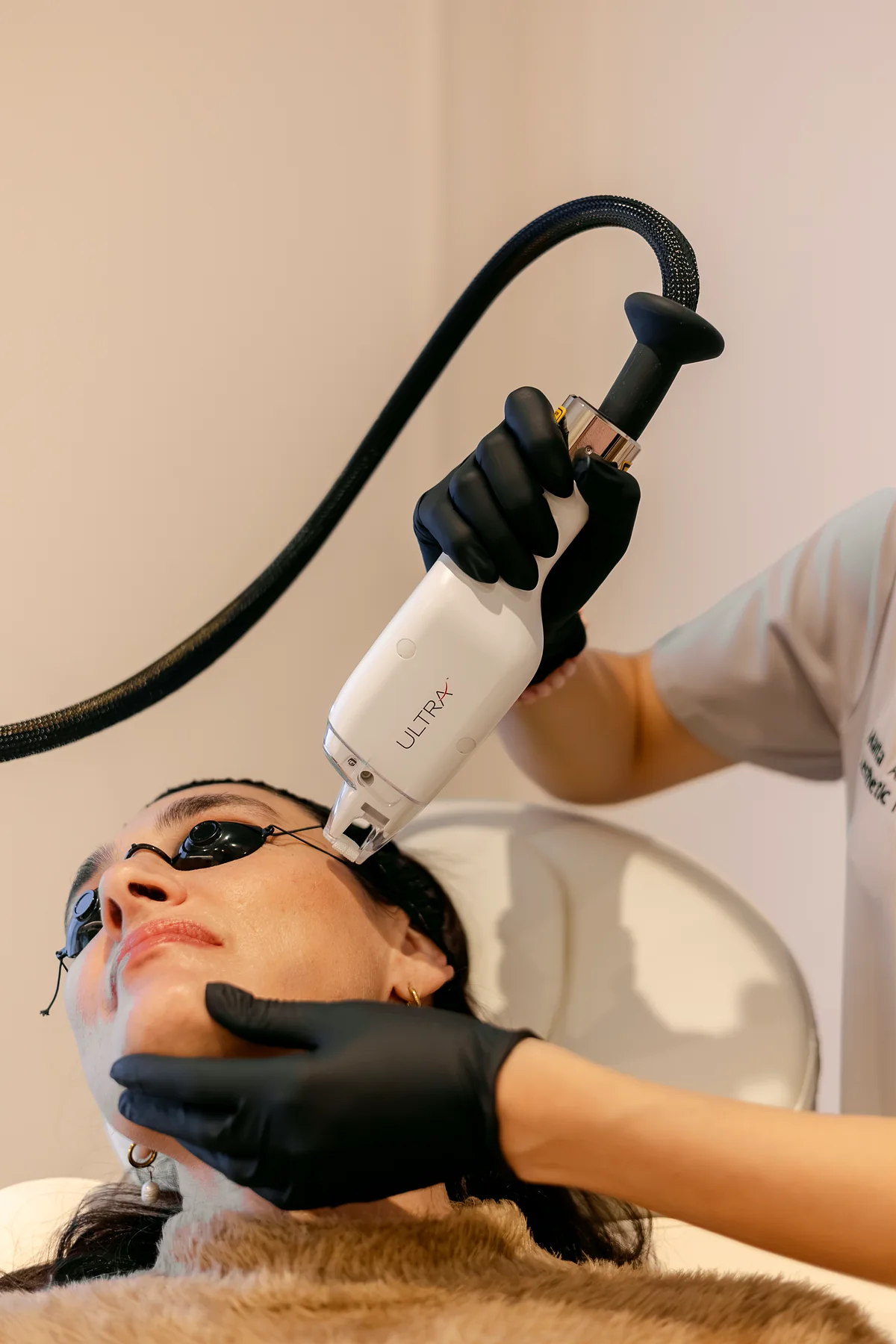
What happens,
in order
Step 1 of 6 · Your first appointment
Your pigment named, your plan agreed
Your first appointment is a consultation. Your practitioner explains what a course is likely to achieve for your pigment and your skin, how many sessions to plan and when to begin, so the first session falls at a good time of year for you. The plan is agreed between you, and you book the sessions when it suits you.
LaseMD Ultra beside
peels, needling and light
Several treatments promise clearer, more even skin. These four are the ones most often weighed against LaseMD Ultra for tone and texture, and several can sit in the same plan.
Microneedling
Microneedling involves no heat. Fine needles make tiny punctures that the skin repairs by producing new collagen, which is why it is used for acne scars, enlarged pores and uneven texture. Where there is little pigment to treat, it can be the better choice; where brown marks or uneven tone are part of the picture, LaseMD Ultra can treat them alongside the texture.
Obagi Blue Peel Radiance
A salicylic-acid-based peel, finished with LED and a hydrating masque, that clears congested skin and evens tone in a single 60-minute facial, with light flaking for a few days as the skin renews. It suits a refresh of clarity and tone; for sun spots, and texture that sits deeper, LaseMD Ultra is planned as a course.
Fire and Ice Facial
Two masks in turn: the first warms the skin with acids and retinol to resurface it, the second cools and calms it, and LED follows. It refreshes rough, tired-looking skin in one visit. Where uneven pigment is the main concern, the laser works on it more directly, and a facial like this keeps skin in good condition between courses.
MediLUX LED
MediLUX LED works with light at low energy: you lie back beneath the panel with goggles on, and there is nothing to heal afterwards. People choose it for the gentlest possible session, and it is already one step in three of our facials. For fading sun spots and evening out patchy tone, the laser acts on the pigment itself, which light at that energy does not.
A facial between courses, or needling for scarring once the pigment has lifted: your practitioner can build these into one plan across the year.
Every brown mark is assessed before it is treated
Sun spots, melasma and the marks that follow acne or inflammation can all show up as patches of brown, but they sit at different depths and respond to the laser differently, so each is treated in its own way. Every mark on the treatment area is examined before your first session, so anything that deserves a closer medical look is picked up early. Telling these apart, then setting the laser for your skin type, is the clinical side of LaseMD Ultra, and it decides how well a course works.
LaseMD Ultra Pricing
LaseMD Ultra is priced per session or as a course of four, and both start from a consultation that sets your plan for your pigment and your skin.
LaseMD Ultra
Fee
One session
£450
Course of four sessions
£1,600
Each fee already covers the post-laser serum at every visit and a review once your course is complete. You can begin with one session and see how your skin responds, or book the course from the start, and if the number of sessions changes along the way, that is agreed with you before anything more is booked.
The full Price ListQuestions to ask before
a LaseMD Ultra course
These cover what LaseMD Ultra feels like, what it treats and who it suits. Anything that depends on your own skin, we answer at your consultation.
Does LaseMD Ultra hurt?
Most people find it comfortable, because numbing cream goes on first. As the laser passes you feel warmth and a light prickle, and afterwards a mild warmth, like skin that has had some sun, for a while. Your practitioner can adjust the pace and the settings as you go.
What will my skin look like afterwards? Can I go back to work?
You can go back to work. For a couple of days your skin looks as though it has caught the sun, then it may look faintly speckled while treated pigment flakes away, so if you face clients or colleagues, a session before a weekend works well.
How many LaseMD Ultra sessions will I need?
Three to five are often recommended, and the course on our Price List is four. Your practitioner will suggest a number for your pigment and your skin, and it may change as the course goes on, depending on how your skin responds.
When will I see results?
Some people notice a brighter, more even surface within a week or two, once their skin has flaked after the first session. Most of the improvement builds across the course, as each session lightens more pigment and smooths the surface a little further, and it is judged properly at your review.
How long do LaseMD Ultra results last?
Typically six to twelve months for sun spots, and longest with daily sun protection, because the sun keeps acting on your skin after the course ends; a top-up session can keep the result going. Melasma needs ongoing care, and your practitioner plans that with you.
Can LaseMD Ultra treat melasma?
It can be part of a melasma plan, with gentle settings and strict daily sun protection. Because melasma is driven by hormones as well as sunlight, the plan often pairs the laser with skincare, and your practitioner sets its pace for your skin.
Is LaseMD Ultra safe for darker skin?
Yes. It is designed for use across skin types, and darker skin is treated with settings chosen for it. Your skin type is assessed first, your skin may be prepared in the weeks before, and every step of the plan is set to keep the chance of pigment change low.
Can I have LaseMD Ultra in summer?
Yes, with some planning. You arrive at each session without a tan and keep the treated skin out of strong sun afterwards, which fits office weeks more easily than a beach holiday, so your practitioner arranges the sessions around any time you have planned in the sun.
Should I have LaseMD Ultra or microneedling?
It usually comes down to pigment. LaseMD Ultra treats brown marks and uneven tone as well as texture, while microneedling is mainly used for texture, pores and scarring. If pigment isn't part of your concern, microneedling, which involves no heat, is a natural fit, and your practitioner helps you choose.
Is LaseMD Ultra suitable for men?
Yes. Years of sport and time outdoors often show in men's skin as brown spots, uneven tone and a rough surface, and LaseMD Ultra treats these as it does for anyone. The one new habit it may ask of you is daily sun protection, because the result depends on it.
For men
Can LaseMD Ultra treat redness or thread veins?
LaseMD Ultra is made for pigment, tone and texture: its wavelength is taken up by water close to the surface of the skin, which is where those three changes sit. If redness is part of what you'd like to change, your practitioner looks at its cause with you at the consultation.
Is LaseMD Ultra suitable for me?
It suits most adults with sun spots, uneven tone, dullness or rough texture, across skin types. Treatment waits during pregnancy, while a tan fades or a cold sore heals, and for six months after isotretinoin, an acne medicine. Bring a list of the medicines, supplements and skincare you use, including any retinoid or acid, and your practitioner checks everything else before your first session.
What are the risks of LaseMD Ultra?
Most people have only the expected pinkness and roughness for a couple of days. Other effects, such as a flare of spots or cold sores or a temporary change in pigment, are uncommon and usually settle, and infection or scarring is rare. Before you sign a consent form, your practitioner explains every one of these in plain terms, and if your skin does anything that worries you after a session, call the clinic.
An assessment first, then a date to start
A comprehensive diagnostic consultation: a thorough assessment leading to a truly bespoke treatment plan, created by you and your practitioner.
For LaseMD Ultra, that means your pigmentation identified, your skin type assessed and a start date chosen to suit your skin and the time of year.
You can come to Belgravia for the assessment on its own and decide about a course in your own time. You won't be sold to, and you won't be pushed.
Request a consultation Call 020 3355 2030 Your consultation, step by step