Eyes & Tiredness
Looking tired, dark circles, eye bags, even when you're well rested.
Request a consultation
Why eyes look tired
People put it simply: they look tired when they aren't, friends ask whether they're sleeping, concealer has stopped hiding it, or their eyes look heavier in photographs. There is rarely one cause. Most tired-looking eyes show two or three changes at once, and each responds to something different, so the first job is working out which ones are yours.
i
Three kinds of dark circle
i
Three kinds of dark circle
A dark circle can be a shadow, a colour or the vessels beneath. A shadow comes from a hollow under the eye, the tear trough: it deepens under overhead light and softens as you turn towards a window. Colour is brown or grey-brown pigment in the skin itself, often running in families and more common in darker skin tones, and it stays the same in any light. Vessels show as blue or purple where thin skin lets the muscle and blood beneath show through, more so after short nights.
Most circles are a mix of two or three, so we look at yours in more than one light before a plan is made.
What might work: dermal fillers for a shadow; polynucleotides or the EyeLite Protocol where vessels show through; for pigment, a plan agreed at your consultation.
ii
Eye bags
ii
Eye bags
The fat that cushions the eye can move forward as the structures holding it back loosen with age, and the result is a bag beneath the lower lid that no amount of sleep changes. Bags like these often run in families, and your consultation looks at what yours is made of and how it can be approached.
What might work: a plan agreed at your consultation.
iii
Puffiness and fluid
iii
Puffiness and fluid
Puffiness that is worse in the morning, after short nights or salty food, or when allergies flare is usually fluid rather than fat, and it comes and goes through the day. Knowing it is fluid shapes the plan: it guides where filler goes, and the everyday causes often ease with a few simple changes. Swelling that sits lower, on the upper cheek along the bone, is a malar bag, and that is where Endolift® comes in.
What might work: advice on the everyday causes, and a plan built around them; Endolift®, for malar bags.
iv
Crepey skin and fine lines
iv
Crepey skin and fine lines
The skin under the eye is the thinnest on the face. As it loses collagen, it creases more finely and the creases stay when your face is still. It is the skin's quality that has changed, and that is what treatment should address. Lines that appear only when you smile are a separate, movement-related matter, which your practitioner can talk through at your consultation.
What might work: polynucleotides, the EyeLite Protocol.
v
Hooded lids and a lower brow
v
Hooded lids and a lower brow
Heaviness above the eye comes from extra lid skin, fat and a brow that has settled lower over the years, and it often runs in families. Your consultation looks at how much of the heaviness comes from each, and talks through every way of lifting it.
What might work: a plan agreed at your consultation.
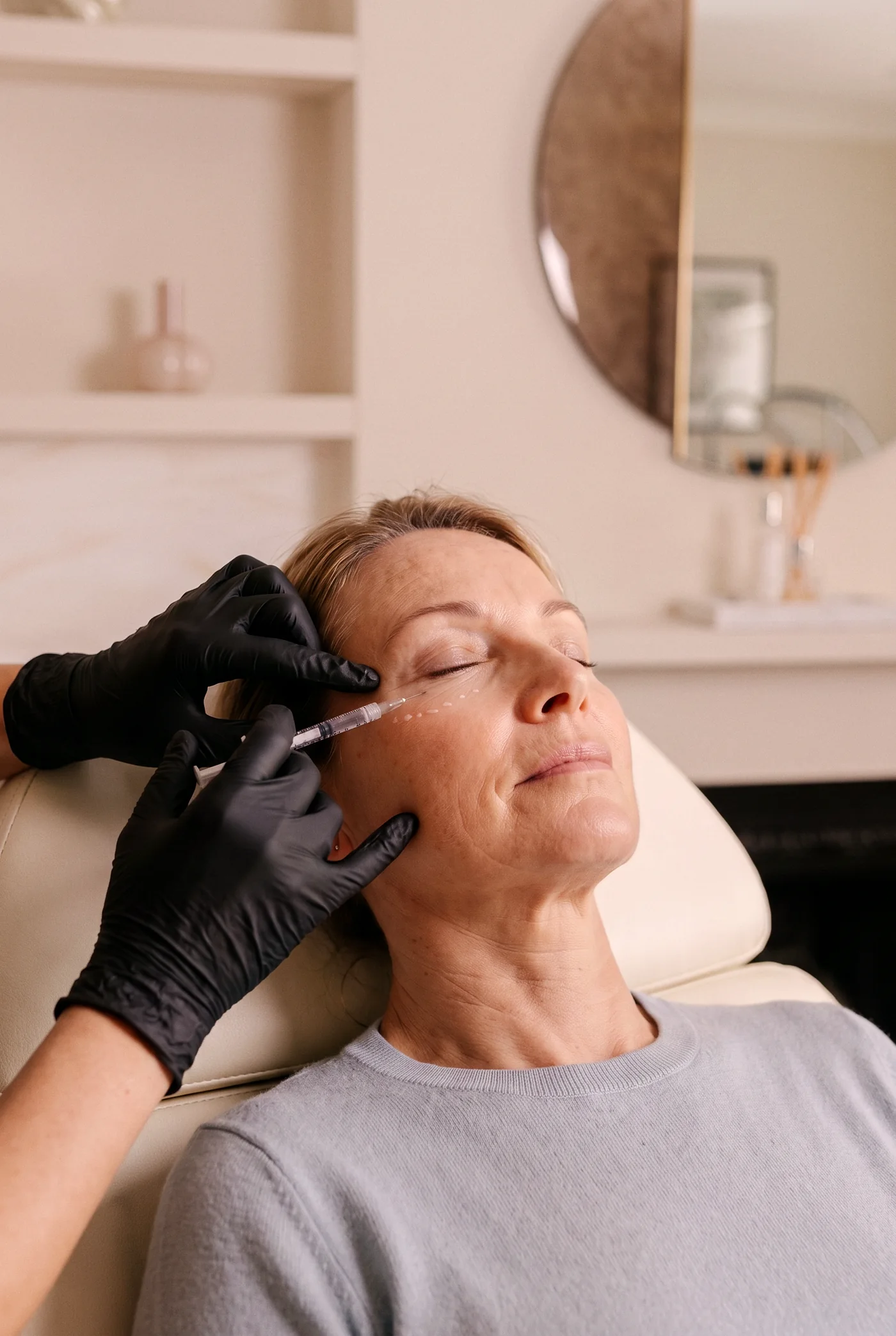
Treatments around the eyes, and where each one fits
Each of these is matched to a particular cause, so an eye plan is put together cause by cause from what your assessment finds, rather than chosen from a menu.
Dermal fillers
For a hollow beneath the eye
A small amount of filler placed deep, close to the bone, can soften a tear-trough hollow and the shadow it casts. It works best on mild hollows with good skin and little puffiness; where thin skin is the larger part of the picture, polynucleotides usually suit it better. The effect is temporary: in studies it commonly lasted around eight to twelve months.
Polynucleotides
For thin, crepey under-eye skin
Polynucleotides are purified DNA fragments, derived from fish, injected in small amounts to improve the quality of thin, crepey skin beneath the eye. They act on the skin itself, and pair well with filler where a hollow also needs support. They are given as a short course a few weeks apart, and any swelling or redness usually settles the same day, so the rest of the day is yours.
Endolift®
For malar bags
Malar bags are soft swellings on the upper cheek, just below the eye and along the cheekbone, and they make a face look tired at any hour of the day. Endolift® works on them from beneath: with the area numbed, a slim fibre carries laser energy under the cheek from one small opening, designed to firm the tissue and reduce the puffiness from within. Most people resume their day straight after treatment, with slight swelling from the anaesthetic. A doctor always performs it here, either Dr Priya Verma or one of the doctors she has trained.
Also part of some eye plans
Skin boosters, in the EyeLite Protocol
Dr Priya's under-eye protocol pairs polynucleotides with NCTF, the one skin booster we use near the eyes, for thin skin that has also lost hydration. It is booked as one appointment. About skin boosters
Questions about tired eyes
Will filler under my eyes look puffy?
Not when it suits the area and is placed with care. Puffiness after filler comes from thin skin, fluid, or too much product, so we check your skin and any puffiness first, and place a small amount deep, close to the bone, to soften the groove without adding bulk. If your eyes tend to hold fluid, polynucleotides are often the better way in.
Can eye bags be treated without surgery?
It depends on what the bag is. Fat pressing forward beneath the lower lid, fluid that comes and goes, and swelling lower down on the cheekbone can look alike in the mirror, and each is approached in its own way. Your practitioner works out which of them you have, then sets out the options for each.
Where's a sensible place to start?
Often with the skin. A course of polynucleotides, or the EyeLite Protocol, for thin, crepey skin is a gentle first step with very little downtime. If a hollow is the main cause, a small, conservative amount of filler may be the better start. The plan moves at your pace.
Can people tell you've had something done?
The aim is that people notice you look less tired, not what changed. Polynucleotides usually leave only a little redness that settles the same day. Filler can leave mild swelling or a small bruise for a few days, easy to plan around.
Is it a course, or a single treatment?
Filler is usually a single appointment. Polynucleotides are a course, typically three or four sessions a couple of weeks apart. Endolift® for malar bags is usually a single appointment. You'll know the full plan, and what each step involves, before agreeing to any of it.
How long do results last?
Under-eye filler is temporary, commonly lasting around eight to twelve months in studies, and it can stay in the tissue for longer than its visible effect. The change from polynucleotides builds over the months after a course. The skin keeps ageing alongside any treatment, so we review results with you over time.
Do men come to you about this?
Often. Looking tired is one of the commonest reasons men come to us, and the assessment is the same. Plans are kept subtle, so the eye area looks less tired rather than treated.
For men
Who are eye treatments right for, and what do you check before starting?
They suit adults whose eyes look tired from a hollow, thin skin or mild bags. At your consultation we ask about your health, allergies (fish included, for polynucleotides), current medication and past treatment around the eyes. If swelling came on suddenly, affects one eye, or comes with bulging, dry or sore eyes, we will ask you to see your GP first, because thyroid and other conditions can cause it. Pregnancy and breastfeeding mean waiting until afterwards.
Is it safe?
Yes, with careful placement, and most effects are mild and short-lived: a little swelling, redness or a small bruise that settles within days. Less often, filler can leave a small lump or a faint bluish tint where it sits close to the surface, and both can be corrected; after Endolift® on the cheek, beyond the minor swelling from the anaesthetic, a small patch can feel numb for a while before it fades. Serious complications are rare, and each is explained to you before you agree to treatment.
How much does eye treatment cost?
Tear-trough filler starts from £550, polynucleotides under the eyes from £350 a session, and the EyeLite Protocol from £495. Endolift® for malar bags is from £1,500 an area. Your plan decides the fee, which is agreed at your consultation.
Price listAround the eyes, precision matters most
The skin under the eye is the thinnest on the face, so small differences show: filler placed a little too shallow can show through as a bluish tint, and too much can look puffy for months. Most tired-looking eyes also have more than one cause, and the treatment for one can make another worse. That is why the assessment decides the order and the amount, so each cause gets the treatment suited to it.
Endolift® for malar bags is given by Dr Priya or by doctors she has taught it to; filler, polynucleotides and the EyeLite Protocol are with Dr Priya or Dr Michelle Emett, both trained in the anatomy around the eye.
Dr Priya and the teamRelated concerns
Tired-looking eyes are often part of a wider picture. If what you've noticed goes beyond the eyes, one of these may be the better place to start.
Tightening & Lifting
Skin laxity, loss of elasticity, noticeable sagging across face, neck and body.
View →Start by finding out which kind you have
A comprehensive diagnostic consultation: a thorough assessment leading to a truly bespoke treatment plan, created by you and your practitioner. We look at your eyes in different light, ask how they change through the day, and tell you plainly which causes are yours and what will help each one. You won't be sold to, and you won't be pushed.
Request a consultation Your first appointment, explained